Daylighting Stream for Water Quality Improvements
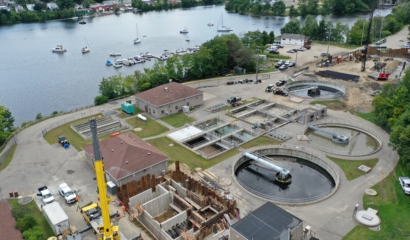
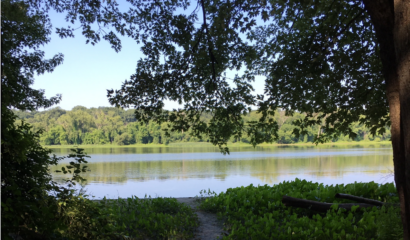
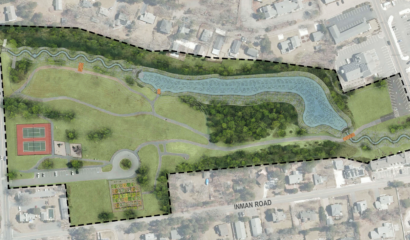
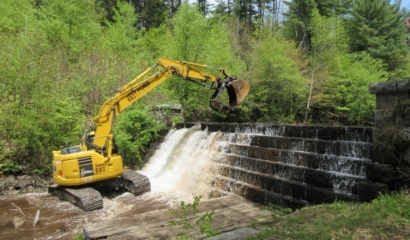
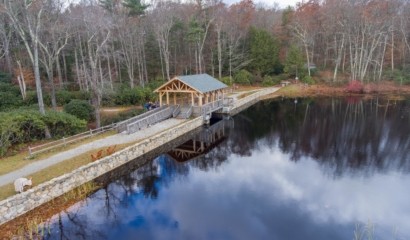
Our firm is assisting the City of Chicopee’s with design services for a multi-phased initiative to improve open space infrastructure and ecological conditions in Chicopee’s Szot Park. Two unused impoundment dams within the park, Upper and Lower Bemis Pond Dam, contribute to poor water quality, and present a potential safety hazard. Removal of the dams will improve water quality, encourage new native vegetation growth, and improve community resilience to flooding within an underserved population center.
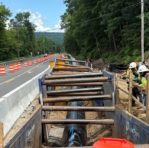
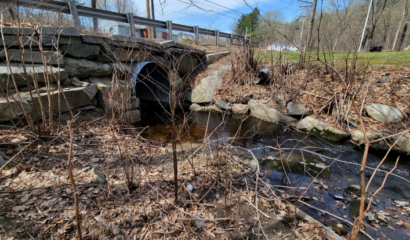
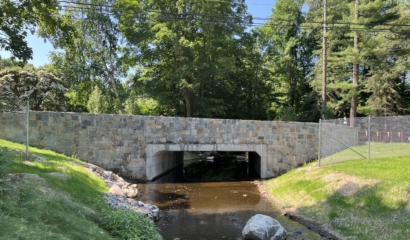
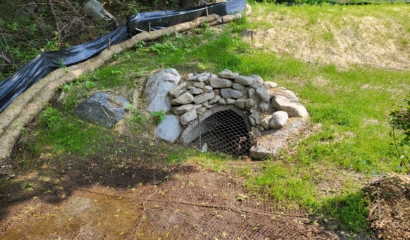
Our firm partnered with the City to perform a feasibility study in order to evaluate the potential restoration of Abbey Brook. The evaluated reach of Abbey Brook included two dams in Szot Park, a roadway culvert, and a 250-foot-long culvert that outfalls to the Chicopee River. Our engineers performed the full design for removing the lower dam and improving Szot Park. Our scope of work included an evaluation of alternatives for removing the lower dam, for removing both the lower and upper dam, and for removing both dams, daylighting the downstream culvert, and increasing the size of the Front Street Roadway culvert.
A topographic and bathymetric survey was performed that included wetland resource areas subject to local, state, and/or federal jurisdiction within the area identified. Sediment samples were collected and tested for a variety of analytical parameters to evaluate potential off-site disposal options and approximate disposal costs. A hydrologic/hydraulic analysis was performed to evaluate the capacity of the dams and culverts. A steady state hydraulic model was developed from the Chicopee River to approximately 0.5 miles upstream of the upper dam.
Lower Bemis Pond Dam Removal
-
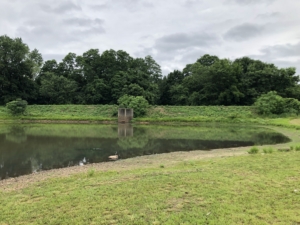
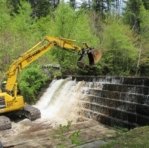
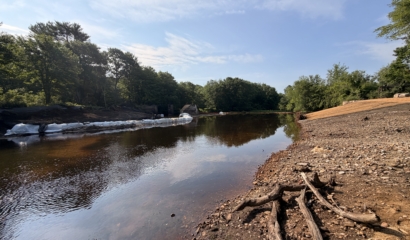
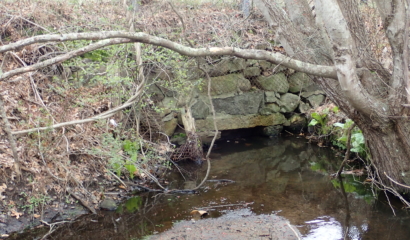
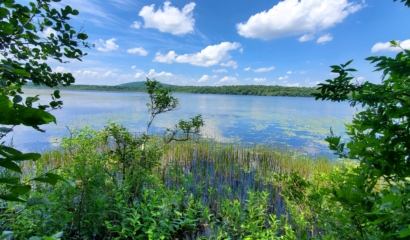
- Lower Bemis Pond Dam, as seen before removal
-
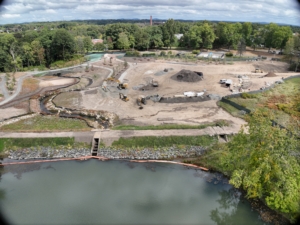
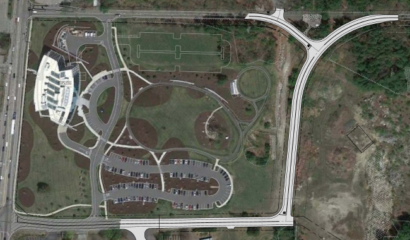
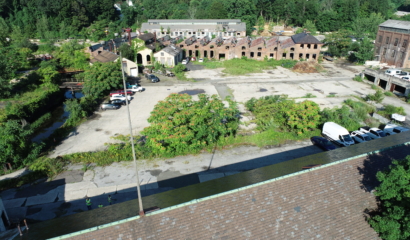
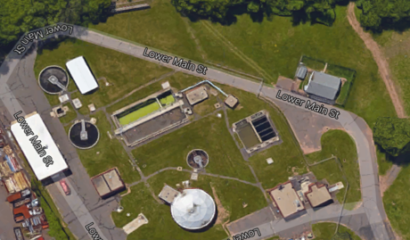
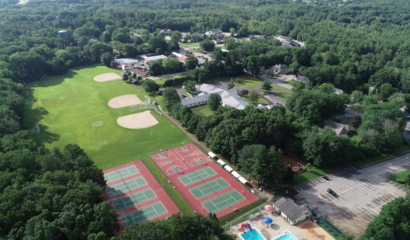
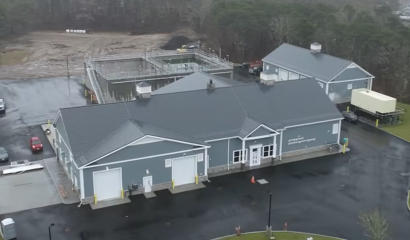
- Aerial view of the project site during construction
-
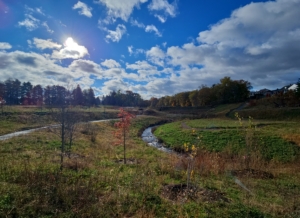
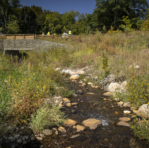
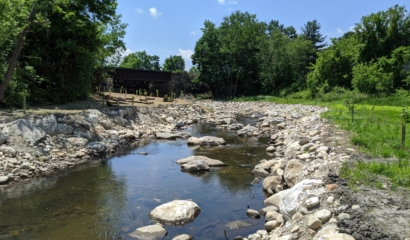
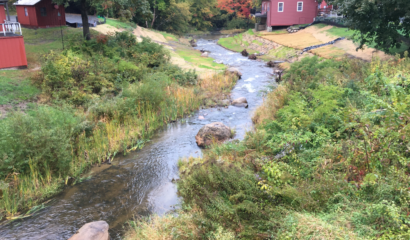
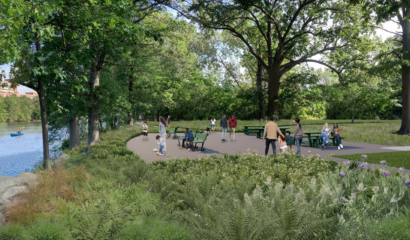
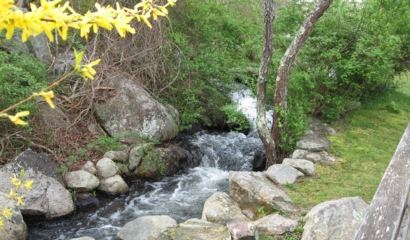
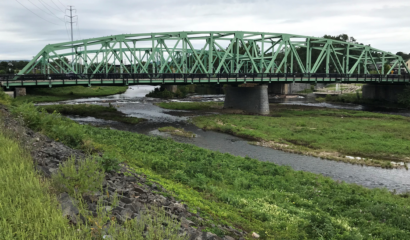
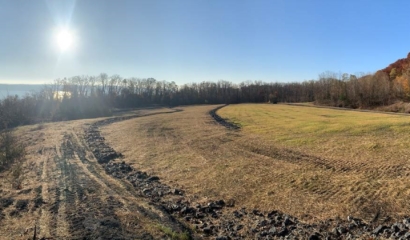
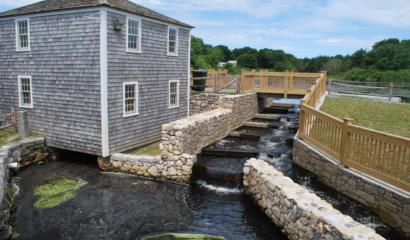
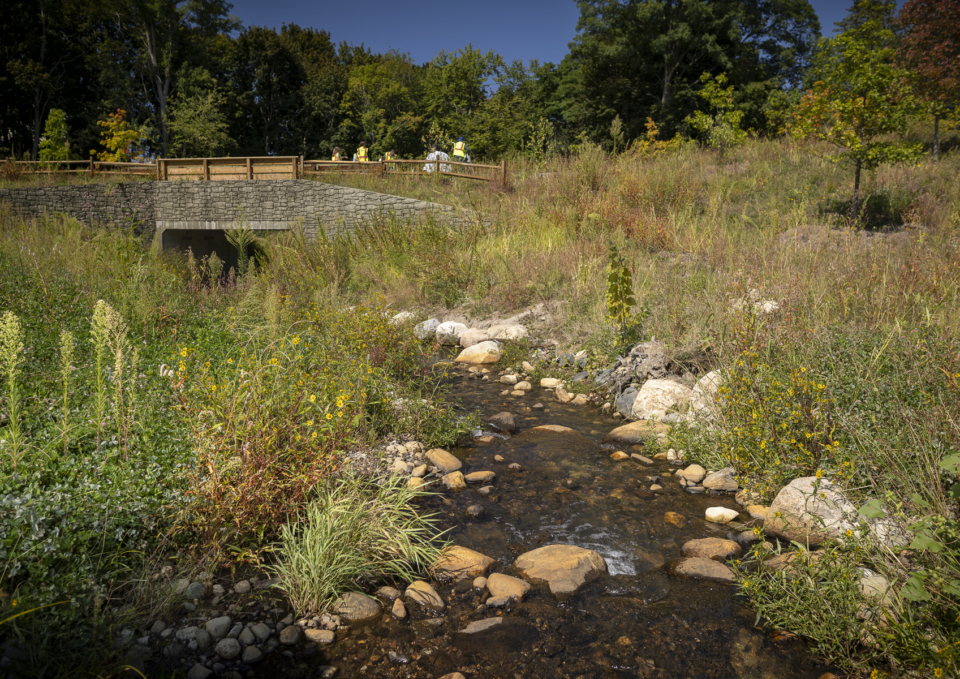
- After removal, Abbey Brook now flows freely through Szot Park
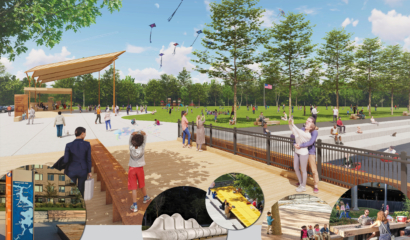
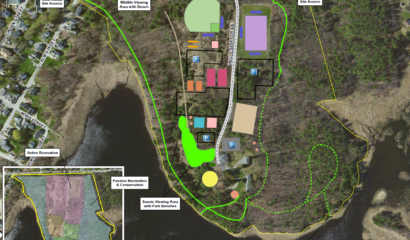
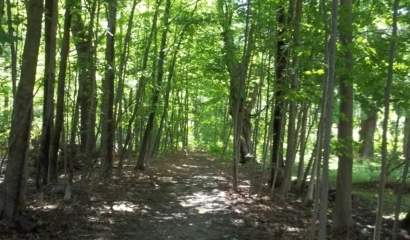
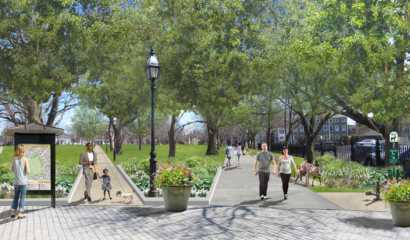
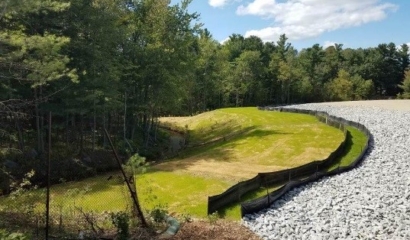
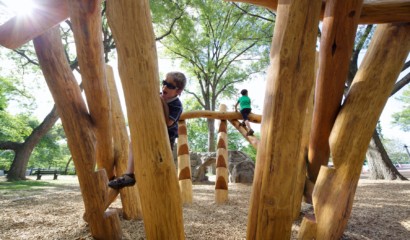
Phase 1 of the restoration initiative included removal of Lower Bemis Pond Dam, realignment of Abbey Brook, ecological restoration through the integration of native plantings, and public-access improvements. The new park space includes recreational and educational amenities, such as an interior boardwalk and outdoor learning areas to enable additional programming at local schools in close proximity to the site.
This complex effort balanced safety, ecology, and community recreation, requiring careful design to integrate nature-based solutions within a heavily used urban space. The result is a revitalized park that offers new passive recreation areas while showcasing how sustainable infrastructure can protect public safety, restore ecosystems, and strengthen community connections to the environment.