
Designing Bridge and Culvert Crossings for Communities and Waterways
An aging bridge or culvert can create several challenges at once, such as restricted water flow, disrupted habitat, roadway flooding, and unreliable access. Thoughtful planning allows communities to collectively assess these needs and design a crossing that responds to its setting. Replacing it is an opportunity to improve how a road serves residents, while also strengthening resilience and supporting the waterway beneath it.

Ribbon-cutting event for the Forbush Mill bridge replacement project.
In Bolton, MA, our firm’s work on the Forbush Mill Bridge project demonstrates how culvert replacement can incorporate community and resilience improvements. The project replaced two aging pipe culverts with a precast three-sided bridge, improved drainage, and restored a stream feeding into the Still River. Supported by a FEMA Hazard Mitigation Grant, the project was part of the Town’s ongoing culvert asset management plan. It shows how planning for aging crossings can bring transportation and resilience needs into the same capital project.
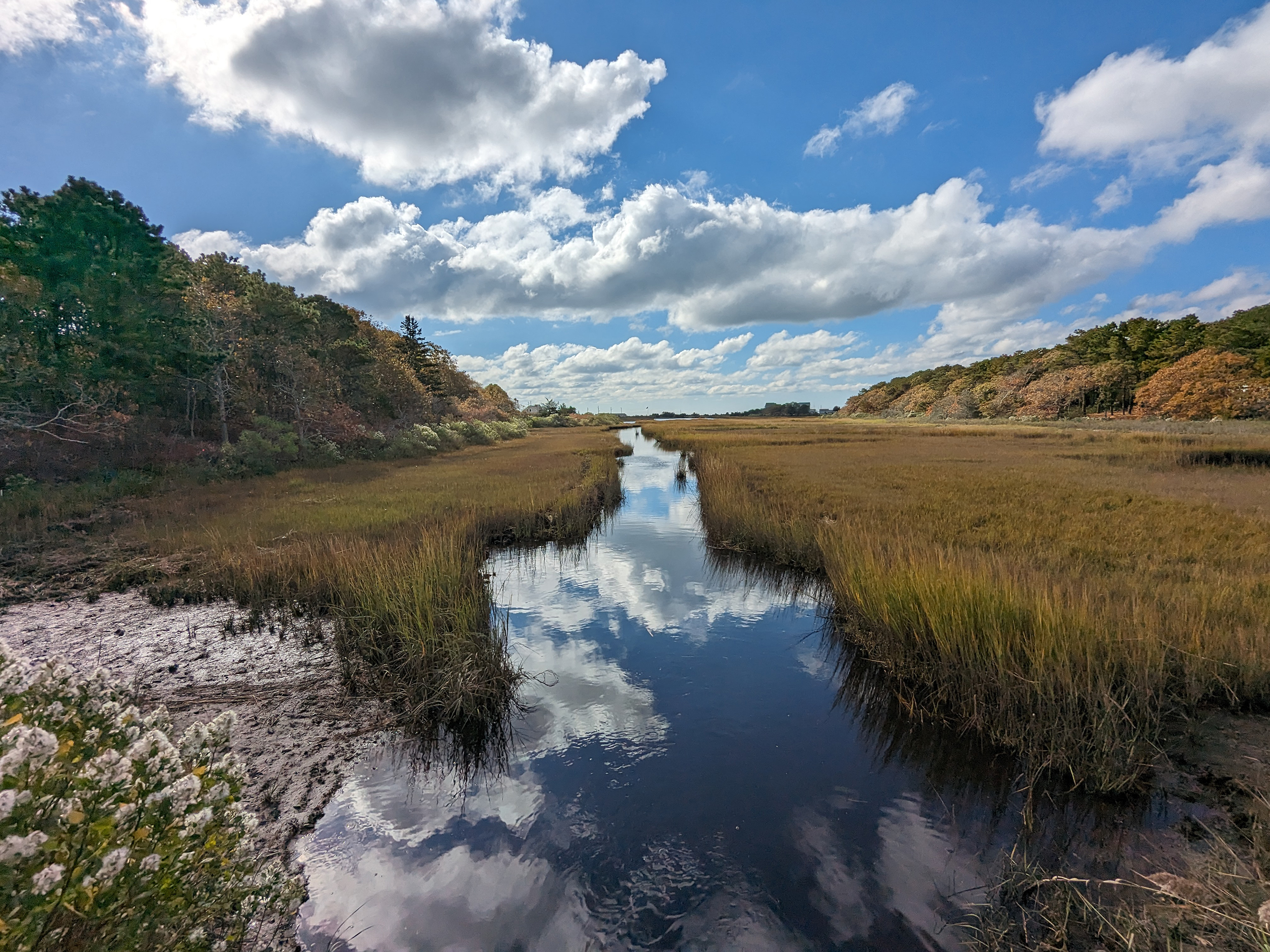
A view of the upstream salt marsh at Weir Creek.
In Dennis, the Weir Creek Tidal Restoration and Culvert Replacement directly addresses environmental conditions at a restricted crossing while integrating the infrastructure improvement into a large-scale salt marsh restoration effort. Two deteriorated, undersized culverts beneath Lower County Road restrict tidal flow to approximately 120 acres of upstream salt marsh. Working with the Association to Preserve Cape Cod, the Town of Dennis, NOAA, and the Cape Cod Conservation Service, Tighe & Bond is designing larger replacement culverts and roadway improvements intended to increase tidal exchange, support salt marsh restoration, improve drainage, and address flooding vulnerability associated with a low-lying roadway. The team used hydrologic and hydraulic evaluations, coastal storm inundation mapping, and salinity modeling to assess the proposed design within the watershed context.
Together, these projects show why communities benefit from looking at waterways and roads as part of the same system. Assessing stream conditions alongside transportation needs can help communities prioritize investments that restore habitat where needed, address flooding concerns, and maintain reliable access.