

Turning Stormwater Inspections into Maintenance Plans
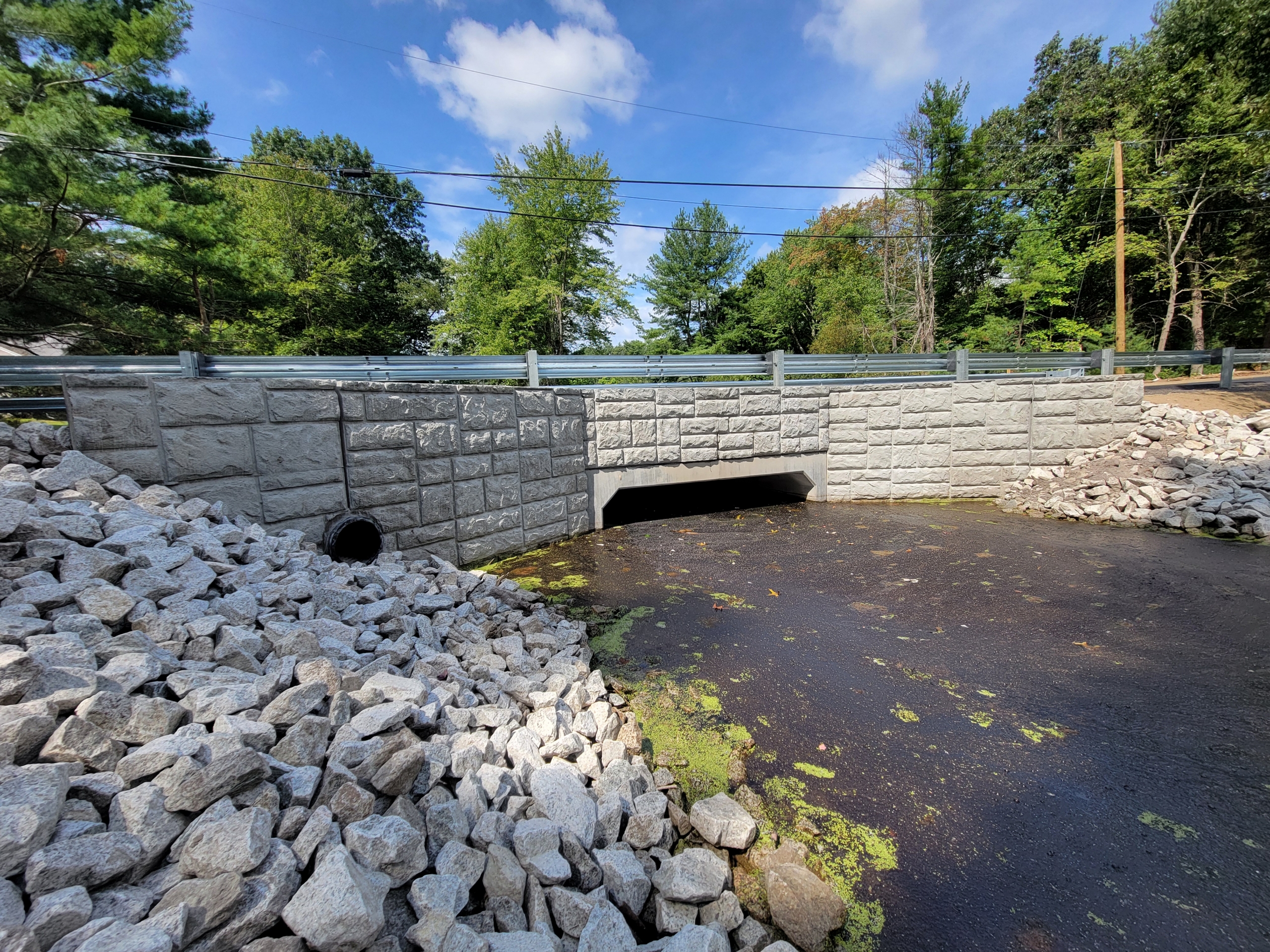
Pond Brook Culvert replacement in Westford, after construction
Adapted from presentations by Evelyn Ramos, PE, Cayleigh Goss-Baker, and Katelyn Donovan, PE
Stormwater control measures (SCMs) depend on ongoing care to protect water quality. For municipal and state officials, the challenge is turning inspection findings into work that crews can schedule and complete. EPA guidance calls for inspection procedures, maintenance schedules, staff training, and standard operating procedures. A practical program starts with an inventory that identifies each SCMs type, location, and maintenance responsibility.
Our analysis of inspection data from 10 Massachusetts MS4 communities found that 69% of inspection records noted at least one maintenance issue. That figure describes records, which may include repeat visits, rather than the percentage of distinct facilities needing repairs. Consistent field forms and photos help staff compare conditions over time. Recording whether crews can locate and reach an SCM is equally useful.
“Inspection data can also help staff make the case for maintenance funding,” said Environmental Scientist Cayleigh Goss-Baker. “Documenting recurring problems helps explain the ongoing workload and gives decision-makers a clearer picture of what their crews need to address it.”
Sorting observations by SCM type reveals where work is needed. Dry detention basin inspections frequently noted brush growth, debris, standing water, and clogged inlets. Many comments entered as “Other” described access or location problems. A GIS inventory can help managers identify recurring needs and decide whether a site requires cleaning, further assessment, or rehabilitation. Each task then needs an assigned team, the necessary equipment, and a place in the schedule. In Wayland, MA, a dedicated DPW stormwater team and an interdepartmental approach connect decisions about new SCMs with ongoing maintenance.
Westford, MA’s Stormwater Management Master Plan shows how routine maintenance fits into a broader program. The Town connects operations and maintenance with drainage improvements, regulatory compliance, and a long-term funding strategy. That connection helps staff plan for both recurring work and larger investments.
“Choosing a stormwater control measure means committing to its care for years to come,” said Project Manager Evelyn Ramos. “The conversation during design should consider what it will take to maintain that SCM as staffing changes and competing demands arise.”
The central lesson is to build a maintenance plan around the staff, equipment, and funding available to carry it out. Field reports of slow infiltration, erosion at new structures, and slopes too steep to mow show why maintenance experience belongs in design and construction decisions. Inspection findings can then guide work on existing facilities and help communities choose new SCMs they can maintain.
“Maintenance findings can help communities make better decisions about future stormwater projects,” said Project Engineer Katelyn Donovan. “When the same maintenance challenges recur, that information can guide the selection and design of SCMs that crews can maintain over time.”